
Fiber Glass Epoxy Laminates Manufacturers in India
FR4, G10 & G11 Fiber Glass Epoxy Laminates — Certified Indian Manufacturer
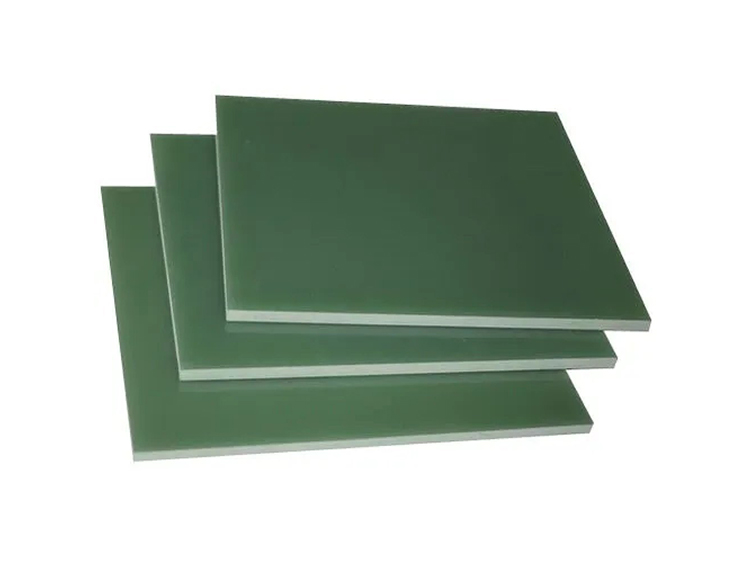
Epoxy glass cloth laminates reinforced with alkali-free woven glass fabric deliver unmatched electrical insulation, mechanical rigidity, and thermal stability across 130°C–180°C operating ranges. ACC Insulations manufactures FR4 (EPGC 202), G10 (EPGC 201), and G11 (EPGC 203) laminate sheets per IEC 60893, NEMA LI-1, and MIL-I-24768 standards — engineered for power transformers, HV switchgear, electric motors, and cryogenic structures.
Every batch undergoes in-house dielectric breakdown testing and tensile verification. Zero voids, zero delamination — guaranteed per batch certification.
What Exactly Are These Laminates?
Alkali-free woven glass fabric gets precision-impregnated with high-purity epoxy resin, then consolidated under industrial hydraulic presses using extreme heat + pressure. Result: a void-free, non-hygroscopic thermoset laminate with stable dielectric properties even under long-term oil immersion. Widely specified in transformer insulation systems, HV switchgear, and Class F/H rotating machinery.

| Technical Specifications — Fiber Glass Epoxy Laminates | |
|---|---|
| Material Category | Epoxy Glass Cloth Laminate — IEC 60893 / NEMA LI-1 |
| IEC / NEMA Grades | EPGC 201 (G10) | EPGC 202 (FR4) | EPGC 203 (G11) |
| MIL-Spec Equivalents | MIL-I-24768/27 (FR4) | MIL-I-24768/2 (G10) | MIL-I-24768/3 (G11) |
| Sheet Thickness | 0.5 mm – 100 mm (Custom CNC-machined parts available) |
| Standard Sheet Sizes | 1020 × 1220 mm | 1220 × 2440 mm | Custom on request |
| Flexural Strength | 400 – 550 MPa (Grade and orientation dependent) |
| Tensile Strength | 280 – 340 MPa |
| Dielectric Strength | 16 – 20 kV/mm (tested in oil per IEC 60243) |
| Dielectric Constant (Dk) | 4.2 – 4.8 @ 1 MHz (G10/FR4) | 2.35 (G11) |
| Dissipation Factor (Df) | 0.020 – 0.035 (G10/FR4) | 0.0025 (G11) |
| Water Absorption | <0.1% after 24h immersion |
| Thermal Class | Class B (130°C) — Class F (155°C) — Class H (180°C) |
| Glass Transition Temp (Tg) | 130°C (G10/FR4) | 175°C (G11) |
| Flame Rating | UL94 V-0 (FR4/EPGC 202 only) |
| Color Available | Natural (aqua-green/yellow), Black, Red, White, Custom |
FR4 vs G10 vs G11 — Grade-by-Grade Breakdown
Selecting the wrong grade risks premature failure under thermal or flame conditions. Detailed breakdown below — matched to IEC and NEMA equivalents:
Brominated epoxy resin matrix — globally accepted standard for flame-retardant electrical insulation. Identical mechanical and dielectric properties to G10. Mandatory where UL94 V-0 certification required. Primary choice for switchgear insulation, PCB base, control panels, and HV busbar supports.
Replaces G10 anywhere. G10 cannot replace FR4 in fire-rated use.
Non-flame-retardant grade. Woven alkali-free glass cloth + halogen-free epoxy resin. Highest mechanical strength of the three grades at room temperature. Glass transition temperature 130°C. Dielectric breakdown >60 kV. Used in structural insulation, cryogenic supports, lapping carriers, and terminal boards where halogen-free specification matters.
"G" = glass fiber. "10" = specific property class per NEMA LI-1.
High-temperature grade engineered for sustained operation at 150–180°C. Retains 50%+ flexural strength at 150°C. Dissipation factor Df = 0.0025 — lowest loss of all three grades. Excellent arc and track resistance. Preferred for HV transformer barriers, Class H motor insulation, high-humidity switchgear, and electric rotor insulation.
Harder to machine than G10/FR4 — requires carbide tooling.
| Property | FR4 (EPGC 202) | G10 (EPGC 201) | G11 (EPGC 203) |
|---|---|---|---|
| Flame Retardant | ✔ UL94 V-0 | ✘ No | ✔ UL94 V-0 |
| Glass Transition Temp | 130°C | 130°C | 175°C |
| Dissipation Factor (Df) | 0.020–0.035 | 0.020–0.035 | 0.0025 |
| Hot Strength @ 150°C | Drops Significantly | Drops Significantly | Retains 50%+ |
| Halogen-Free | ✘ Contains Bromine | ✔ Yes | ✘ Contains Bromine |
| Cryogenic Use | Limited | ✔ Preferred | Limited |
| Machinability | Easy | Easy | Needs Carbide Tools |
Standards & Certifications
ACC Insulations manufactures per globally recognized standards. Each shipment includes batch test certificates with dielectric and mechanical data.
Manufacturing Process — How Each Sheet Gets Made
ACC Insulations uses precision manufacturing capabilities with full in-house quality control:
Alkali-free, electrically-grade woven glass cloth — 7628 weave style. Zero alkaline content prevents moisture-induced dielectric loss.
Controlled dip-coating with high-purity epoxy resin. Brominated resin for FR4/G11 grades. Halogen-free resin for G10/EPGC 201.
Impregnated plies stacked to target thickness, then consolidated under industrial hydraulic presses — high heat + pressure eliminates all air pockets and voids.
Post-cure thermal seasoning ensures dimensional stability and peak resin cross-linking. Prevents warping or delamination in service.
Dielectric breakdown (IEC 60243), tensile/flexural strength, water absorption, and dimensional inspection — every batch. Batch test certificates issued.
Custom epoxy components — spacers, slot wedges, rods, tubes, phase barriers — machined per OEM technical drawings.
Key Performance Features
- High Dielectric Strength (16–20 kV/mm): Prevents electrical tracking and leakage in HV transformers, switchgear, and motors operating at 11–33 kV and above.
- Mechanical Rigidity (400–550 MPa Flexural): Maintains structural form under thermal cycling, vibration, and mechanical load — critical for slot wedges and busbar supports.
- Non-Hygroscopic (<0.1% Water Absorption): Dielectric performance remains stable in high-humidity environments and during long-term oil immersion — no swelling, no delamination.
- Chemical Resistance: Unaffected by transformer oils, solvents, dilute acids, and alkalis — essential for oil-cooled transformer insulation barriers.
- Flame Retardancy (FR4): UL94 V-0 self-extinguishing behavior. Meets NEMA test method 7.11 Class I flame resistance. Mandatory for indoor switchgear and control panels.
- Low Dielectric Loss (G11, Df = 0.0025): Minimal energy dissipation at HF makes G11 preferred for high-frequency insulation and precision electrical test equipment.
- Thermal Stability up to 180°C: G11 retains structural integrity far beyond G10/FR4 glass transition of 130°C — safe for Class H motor applications.
- Full Machinability: Precision CNC-machined into custom epoxy components — spacers, rings, washers, tubes — per OEM drawings.
Industrial Applications — Where These Laminates Get Deployed
Foundational insulating materials for critical electrical infrastructure across India and export markets:
Insulation barriers, HV winding supports, core bolts, spacers, end insulation rings. Oil-compatible grades.
Arc chutes, busbar supports, phase separators, phase barriers. FR4 mandatory for UL94 V-0 compliance.
Slot wedges, end rings, packing, washers. Class F (FR4) and Class H (G11) versions available.
High-vibration structural insulation for traction motors, pantograph isolators, and rail signalling equipment.
Wind turbine generator insulation, solar inverter components, energy storage system barriers.
G10/EPGC 201 maintains strength and low thermal conductivity at cryogenic temperatures — superconductor and LNG applications.
Terminal boards, test fixtures, lapping carriers, high-strength insulating washers, PCB base material.
Explosion-proof equipment insulation, subsea electrical barriers, MIL-spec structural composite parts.
Engineering Tools Suite
Calculate dielectric margins, load-bearing capacities, and sheet weight for FR4, G10, and G11 grades — instantly.
Frequently Asked Questions
FR4 (EPGC 202) contains bromine — rated UL94 V-0, self-extinguishing per NEMA test method 7.11 Class I. G10 (EPGC 201) uses halogen-free epoxy — no fire-retardant certification. Both share identical mechanical strength (400–550 MPa) and dielectric properties (16–20 kV/mm). FR4 always substitutes G10 safely. G10 never substitutes FR4 where UL94 V-0 compliance mandated.
IEC 60893 product codes: EP = epoxy resin, GC = glass cloth, 201/202 = property serial numbers. EPGC 201 = G10 (non-FR, Class F). EPGC 202 = FR4 (flame-retardant, UL94 V-0, Class F). EPGC 203 = G11 (high-temperature, Tg 175°C, Class H). Cross-references: HGW 2372 (German/DIN), MIL-I-24768/2, /3, /27 (US military).
G11 (EPGC 203) uses a different epoxy resin formulation with Tg = 175°C vs 130°C for G10/FR4. Retains 50%+ flexural strength continuously at 150–180°C. Dissipation factor Df = 0.0025 — far lower than G10/FR4's 0.020–0.035. Arc resistance and track resistance also superior. Recommended for Class H motors, HV transformer barriers, and high-frequency insulation.
Sheets manufactured from 0.5mm–100mm. Full CNC machining into custom FRP components — spacers, slot wedges, arc chutes, rods, tubes, standoffs — per OEM/customer technical drawings. Both prototype and production volumes accepted.
Specifically engineered for oil compatibility. No delamination, swelling, or dielectric loss during long-term hot oil immersion. Dielectric strength tested in oil per IEC 60243 — 16–20 kV/mm confirmed. Used as primary barrier insulation in oil-cooled distribution and power transformers.
All three grades absorb less than 0.1% water (24h immersion) — significantly better than phenolic/paper-based laminates. For sustained high-humidity + elevated temperature environments, G11 (EPGC 203) preferred due to Tg 175°C and superior arc resistance. G10 (EPGC 201) second choice for halogen-free specifications in humid conditions.
Why Choose ACC Insulations?
- Batch test certificates with every shipment
- IEC 60893 + NEMA LI-1 + MIL-I-24768 compliant
- Custom CNC machining per OEM drawings
- 0.5mm–100mm sheets — any size, any grade
- Pan-India delivery — Maharashtra based