
(Oil Impregnated)
(Pre-Compressed)
Content
Continuous Rating
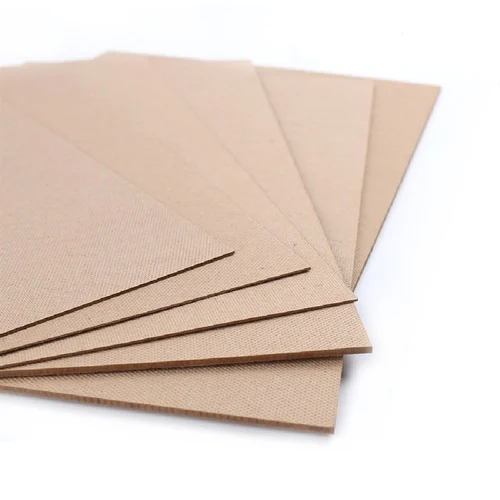
Pre-Compressed Pressboard
Pre-compressed pressboard — also referred to as transformer board, electrical pressboard, or cellulose insulation board — is the primary structural insulation material inside every oil-filled power and distribution transformer. Manufactured from 100% pure sulphate-process cellulose wood pulp and pre-compressed to a high density before delivery, this board forms the mechanical backbone of the transformer's internal insulation system: supporting winding geometry, maintaining oil duct clearances, and delivering reliable dielectric performance across a transformer's 25–40 year operating life.
ACC Insulations distributes high-quality pre-compressed pressboard in Nashik, Maharashtra, India, supplying OEM power and distribution transformer manufacturers with flat boards, wound cylinders, angle rings, winding spacers, and custom-fabricated shapes. Our boards comply with IEC 60641-1, IEC 60641-2 (BP & BPH grades), and IS 1576, with fully custom dimensions available to your transformer design specification.
For demanding EHV and large power transformer applications, our high-density pre-compressed pressboards deliver maximum dimensional stability under the highest clamping loads.

What Is Pre-Compressed Pressboard?
Pressboard — interchangeably called transformer board, electrical pressboard, or insulation board — is a thick, dense sheet of cellulose fibre engineered specifically for structural electrical insulation in oil-filled transformers. It is the heavier-duty companion to transformer kraft paper: while insulation paper runs 0.05 mm to 1.0 mm thick and wraps individual conductor turns, pressboard spans 2 mm to 50 mm in thickness and provides the large structural insulation elements that define a transformer's internal architecture.
Pre-compression is the process that separates this grade from ordinary transformer board. During manufacture, the freshly formed cellulose board is compressed under controlled high pressure and elevated temperature before it leaves the factory. This treatment does three critical things:
- Removes residual moisture — the compression and heat drive the cellulose moisture content below 1.0%, which is critical because absorbed moisture is the single greatest cause of premature transformer insulation ageing and reduced dielectric strength
- Raises density to 1.0–1.3 g/cm³ — compared to 0.85–0.95 g/cm³ for uncompressed board, this higher fibre density delivers greater mechanical compressive strength, improved dielectric performance per millimetre, and far better resistance to oil duct narrowing under winding clamping loads
- Eliminates in-service dimensional change — because the board is already at its final compressed state when installed, it does not shrink further under winding axial clamping forces during transformer assembly or thermal cycling in service — keeping oil duct dimensions, creepage clearances, and winding geometry exactly as the designer calculated
Why dimensional stability matters so much: In a power transformer, every oil duct must maintain a precise minimum width for proper oil circulation and thermal cooling. If pressboard spacers compress or creep after assembly, oil ducts narrow, cooling degrades, hot-spot temperatures rise above design limits, and insulation ageing accelerates. A transformer rated for 30 years of service can fail in under 10 if cooling is compromised from the start. Pre-compressed pressboard eliminates this risk by delivering final-density material before it ever reaches the transformer factory.
Technical Specifications
| Pre-Compressed Pressboard — Technical Data Sheet | |
|---|---|
| Base Material | 100% pure sulphate-process (kraft) cellulose wood pulp — no synthetic binders |
| Grade (IEC 60641-2) | BP (pre-compressed) and BPH (high-density pre-compressed) |
| Density (pre-compressed) | 1.0 to 1.3 g/cm³ |
| Thickness Range | 2 mm to 50 mm (flat boards); custom thicknesses on request |
| Dielectric Strength (dry) | ≥ 10 kV/mm |
| Dielectric Strength (oil impregnated) | Up to 25 kV/mm — design value for transformer insulation calculations |
| Residual Moisture Content | < 1.0% after vacuum drying; < 0.5% achievable during transformer processing |
| Ash Content | < 1.0% (low ionic contamination protects transformer oil quality) |
| Tensile Strength (MD) | ≥ 70 N/mm² (machine direction) |
| Compressive Strength | High — resists axial winding clamping loads without deformation |
| Thermal Class | Class A — 105°C continuous operating temperature |
| Oil Compatibility | Fully compatible with mineral transformer oil (ASTM D3487 / IEC 60296) |
| Colour | Natural Brown |
| Available Forms | Flat boards, cylinders, angle rings, spacers, strips, custom shapes |
| Applicable Standards | IEC 60641-1, IEC 60641-2, IS 1576, referenced in IEC 60076-3 |
IEC 60641-2 Grade Reference — BP vs BPH
| IEC Grade | Density (g/cm³) | Typical Use | Voltage Class |
|---|---|---|---|
| BP (Pre-Compressed) | 1.0 – 1.15 | Distribution & medium-power transformers, spacers, flat boards | Up to 132 kV |
| BPH (High-Density Pre-Compressed) | 1.15 – 1.3 | Power & EHV transformers, cylinders, angle rings, critical barriers | 132 kV to 400 kV+ |
Pre-Compressed vs Standard Pressboard — A Direct Comparison
Transformer design engineers specify pre-compressed pressboard because its behaviour under load is fundamentally different from standard (non-pre-compressed) board. The differences affect transformer performance, cooling efficiency, and long-term insulation reliability. Here is a direct property comparison:
Pressboard Forms — What ACC Insulations Supplies
Pre-compressed pressboard is not a single product — it is fabricated into several distinct forms, each serving a specific structural and insulation role within the transformer. ACC Insulations manufactures and supplies all of the following:
Insulation Cylinders
Wound or formed into hollow cylinders that slide concentrically between the LV and HV windings, forming the main inter-winding insulation barrier and defining the critical radial oil duct. Supplied in custom inner diameter, outer diameter, and length to transformer drawings.
Winding Spacers & Sticks
Flat strips and sticks positioned radially between winding turns to create axial oil ducts for forced and natural oil cooling. The precise width and thickness of each spacer determines oil duct dimensions, pressure drop, and cooling effectiveness.
Angle Rings & End Rings
L-shaped or profiled rings fitted at the top and bottom of windings to provide end insulation and protect leads exiting the winding assembly. Critical for withstanding impulse and switching surge voltage stress at winding ends where the electric field is highest.
Flat Boards & Barriers
Used as inter-winding barriers, phase-to-phase insulation barriers, and flat spacer plates. Available in thicknesses from 2 mm to 50 mm for different voltage class clearance requirements from 11 kV distribution to 400 kV EHV transformers.
Bushing Insulation Cylinders
Cylindrical pressboard forms used inside high-voltage oil-impregnated paper (OIP) bushings, providing the main dielectric between the HV conductor and grounded flange, and required to withstand both operating voltage and full lightning impulse withstand voltage (LIWV).
Custom Machined & CNC-Routed Parts
Cut, routed, or machined to any profile from customer engineering drawings — stepped rings, slotted boards, profiled end rings, clamping rings, and complex multi-contour shapes for special power transformer and reactor designs.
Key Electrical & Mechanical Properties
- High dielectric strength up to 25 kV/mm (oil impregnated) — provides a reliable electrical insulation barrier between HV and LV windings, preventing dielectric breakdown across the transformer's full rated service life under both power frequency and impulse voltage conditions
- Superior mechanical compressive strength — resists the high axial clamping forces applied during transformer assembly (which can reach several tonnes for large power transformers) without cracking, delaminating, or permanent deformation
- Dimensional stability under sustained axial load — pre-compressed at the factory to final density, the board does not creep or shrink under winding loads; oil duct clearances, creepage distances, and winding geometry remain exactly as designed throughout the transformer's entire service life
- Low residual moisture (<1.0%) — moisture is the primary driver of cellulose insulation ageing and dielectric failure. The pre-compression process drives moisture out before delivery, and the board vacuum-dries readily to below 0.5% during transformer vapour-phase or hot-oil processing
- Full transformer oil impregnation compatibility — the open cellulose fibre structure absorbs mineral transformer oil completely during vacuum drying and oil filling, with no synthetic binders, coatings, or resin treatments that could block oil penetration or contaminate the oil
- High purity — ash content <1.0% — low ionic contamination protects transformer oil dielectric strength from degradation, preserving oil breakdown voltage and extending oil change intervals over decades of service
- Thermal Class A — rated to 105°C continuous — maintains physical integrity and dielectric properties through decades of thermal cycling up to 105°C, and tolerates short-duration emergency overload temperatures without accelerated degradation
How Pre-Compressed Pressboard Works Inside an Oil-Filled Transformer
Understanding why pressboard quality directly determines transformer reliability requires a picture of what is happening inside the transformer's active part — and what each pressboard component is being asked to do under operating conditions.
A transformer winding assembly consists of thousands of turns of insulated copper or aluminium conductor wound in carefully controlled layers. Between the LV winding and the HV winding — which may differ by 11 kV, 33 kV, 132 kV, or 400 kV — sits the main insulation system where pre-compressed pressboard does its most critical work:
- The main insulation cylinder — a pressboard cylinder sitting concentrically between LV and HV windings. Its wall thickness is calculated to withstand the full phase-to-phase voltage plus the required lightning impulse withstand level (LIWV) with prescribed safety factors under IEC 60076-3
- Radial spacers between winding turns — pressboard sticks create the axial oil ducts through which cooling oil flows by natural or forced circulation. If these spacers compress or move after assembly, oil duct width narrows, flow resistance increases, hot-spot temperatures rise above design limits, and the transformer ageing rate accelerates exponentially
- End rings and angle rings at winding tops and bottoms — the electric field at winding ends is always the highest-stress zone. Angle rings reshape the field distribution, preventing the high field from initiating a discharge that could propagate along the oil duct surface and cause a flashover failure
- After vacuum drying and oil filling — transformer oil impregnates every microscopic pore in the pressboard's cellulose structure. The resulting oil-pressboard composite achieves a dielectric strength (20–25 kV/mm) far higher than either component alone — because oil eliminates the air voids where partial discharge (PD) originates and grows into a full insulation failure
Partial discharge and why it matters: Even a tiny air void — a few microns across — trapped within a solid insulation system can initiate partial discharge at relatively low electric field levels. PD erodes surrounding insulation, generates hydrogen and other dissolved gases detectable by Dissolved Gas Analysis (DGA), and over time can grow into a complete insulation failure. Pre-compressed pressboard, fully vacuum oil-impregnated, leaves no residual air voids — making it inherently PD-resistant under normal operating field strengths.
Applications of Pre-Compressed Pressboard
Pre-compressed cellulose pressboard is the standard insulation board material across all oil-filled electrical equipment categories. Key applications include:
- Power transformers (11 kV to 400 kV and above) — main inter-winding insulation cylinders, winding end insulation angle rings, inter-winding phase barriers, oil duct spacers, core clamping insulation, and lead support structures
- Distribution transformers (up to 33 kV) — winding spacers, inter-winding barriers, and insulation cylinders for medium-voltage distribution networks. High-volume OEM supply available
- Instrument transformers — CTs and VTs — insulation cylinders and barriers inside current transformers (CT) and voltage transformers (VT) for revenue metering and protection applications
- High-voltage OIP bushings — cylindrical insulation bodies inside oil-impregnated paper (OIP) bushings connecting transformer windings to external busbars at 33 kV to 400 kV+
- Reactors and smoothing chokes — insulation spacers and barriers in oil-filled series reactors, shunt reactors, and power quality filters
- On-load tap changers (OLTC) — insulation barriers and structural supports inside tap changer compartments requiring reliable dielectric performance under repetitive switching conditions
Standards and Compliance
ACC Insulations pre-compressed pressboard is tested to the following international and Indian electrical standards:
Pressboard and Presspaper for Electrical Purposes — Definitions, general requirements, and test methods
Requirements for individual material types — BP (pre-compressed) and BPH (high-density pre-compressed) grades
Indian Standard for electrical insulation papers and boards — applicable for procurement by Indian utilities and OEMs
Referenced for transformer insulation levels, impulse withstand voltage, and clearance requirements that pressboard must support
OEM specifications accepted: We distribute pre-compressed pressboard to OEM transformer design specifications and customer-defined test requirements for density, moisture, dielectric strength, and dimensional tolerances. Contact our technical team with your voltage class and specification requirements.
Why Transformer Manufacturers Choose ACC Insulations
- Consistent quality across every batch — controlled pre-compression process delivers uniform density (1.0–1.3 g/cm³), dielectric strength, and dimensional tolerances from the first board to the last, batch after batch
- Full custom fabrication capability — flat boards, insulation cylinders, angle rings, winding spacers, and complex machined profiles manufactured to your engineering drawings and transformer design specifications
- IEC 60641 compliance with batch test certificates — dielectric strength, moisture, ash content, and compressive strength test certificates shipped with every order for OEM quality records
- Low ash content protects transformer oil — high-purity cellulose pulp ensures the board does not leach ionic contaminants into transformer mineral oil, protecting breakdown voltage over the equipment's full 30–40 year service life
- Reliable OEM production scheduling — consistent lead times and stock availability support transformer manufacturer production planning across distribution and power transformer lines
- Technical support from material selection to dimensional specification — our engineering team supports material grade selection (BP vs BPH), thickness specification, and fabrication design across voltage classes from 11 kV to 400 kV+
- India-based manufacturer — Nashik, Maharashtra — short lead times, competitive pricing in INR, and supply chain reliability for Indian transformer OEMs and exporters
Industries and Sectors Served
- Power transformer manufacturing — 11 kV to 400 kV and EHV ratings
- Distribution transformer manufacturing — single-phase and three-phase, up to 33 kV
- Instrument transformer manufacturing — current transformers (CT) and voltage transformers (VT)
- High-voltage OIP bushing manufacturing
- Oil-filled reactor and smoothing choke manufacturing
- Utilities, state electricity boards, and power transmission companies (STUs, CTUs)
- Electrical equipment exporters and EPC contractors
Engineering Tools Suite
Calculate required clamping pressures, dielectric safety margins, and pressboard thickness for your power and distribution transformer insulation system using our interactive engineering tools.
Frequently Asked Questions
Pre-compressed pressboard (IEC 60641-2 grades BP and BPH) is cellulose-based electrical insulation board subjected to controlled mechanical compression during distribute — before it reaches the transformer factory. This pre-compression removes residual moisture to below 1.0%, increases the board's density to 1.0–1.3 g/cm³, and eliminates the further compression that would otherwise occur under winding axial clamping loads during transformer assembly. Standard non-pre-compressed board continues to compress and settle inside a transformer after manufacture, narrowing oil duct clearances and altering winding geometry. Pre-compressed pressboard is dimensionally stable from the moment of installation, making it the required material for precision oil-filled transformer insulation design.
Pre-compressed cellulose pressboard uniquely combines all the properties that oil-filled transformer insulation systems require: dielectric strength up to 25 kV/mm when oil impregnated, high mechanical compressive strength to withstand winding clamping loads, full compatibility with transformer mineral oil (oil impregnates the cellulose fibres, eliminating partial discharge voids), low ionic contamination that protects oil quality over decades, and dimensional stability through thermal cycling at Class A temperatures. No synthetic plastic, epoxy resin, or composite insulation material replicates this combination at comparable cost for oil-filled transformer construction across all voltage classes.
Pre-compressed pressboard is available in multiple fabricated forms: flat boards and sheets for inter-winding barriers and oil duct spacers; wound or formed cylinders for main insulation between HV and LV windings; angle rings and end rings for end insulation at winding tops and bottoms; pressboard strips and sticks for radial spacers between winding turns; bushing insulation cylinders for OIP bushings; and custom-machined or CNC-routed parts to customer engineering drawings. ACC Insulations processes and supplies all these forms in custom dimensions to transformer design specifications.
Dry pre-compressed pressboard has a dielectric strength of approximately 10–12 kV/mm. When fully oil impregnated after transformer vacuum drying and oil filling, the dielectric strength increases to 20–25 kV/mm — because transformer mineral oil fills all microscopic pores in the cellulose fibre structure, eliminating the air voids where partial discharge originates. The oil-impregnated dielectric strength value of 20–25 kV/mm is the design figure used by transformer insulation engineers for clearance, creepage, and barrier thickness calculations under IEC 60076-3.
Transformer kraft paper (electrical insulation paper) is thin — typically 0.05 mm to 1.0 mm — and is used for turn-to-turn and layer-to-layer conductor insulation within the windings themselves. Pre-compressed pressboard is much thicker — 2 mm to 50 mm — and provides the major structural insulation components: the main inter-winding insulation cylinder between HV and LV windings, winding end angle rings, oil duct spacers, and phase-to-phase barriers. Both materials are cellulose-based, fully transformer oil-compatible, and used together in every oil-filled transformer insulation system. They complement each other — neither can substitute for the other.
Pre-compressed pressboard from ACC Insulations complies with IEC 60641-1 (pressboard for electrical purposes — definitions and general requirements), IEC 60641-2 (requirements for individual material types including BP pre-compressed and BPH high-density pre-compressed grades), and IS 1576 (Indian Standard for electrical insulation papers and boards). We also supply pressboard manufactured to OEM transformer design specifications and customer-specific dimensional and test requirements on request.
Yes. ACC Insulations distributes pre-compressed pressboard in fully custom dimensions including custom board thicknesses from 2 mm to 50 mm, cylinder inner and outer diameters and lengths, angle ring and end ring profiles, and machined spacer shapes. We work directly from customer engineering drawings and transformer design specifications. Batch test certificates are available with each order. Contact our technical sales team with your voltage class, dimensional requirements, and required grade (BP or BPH).
Pre-compressed pressboard is suitable for all voltage classes of oil-filled transformers — from distribution transformers up to 33 kV through medium and high-voltage power transformers at 66 kV, 132 kV, 220 kV, and 400 kV, up to EHV and HVDC equipment. The appropriate IEC grade (BP or BPH), board thickness, cylinder wall thickness, and fabricated form are selected to match each transformer's specific voltage class, impulse withstand level (LIWV), and mechanical load requirements. Our technical team can assist with material selection across voltage classes.