Fibre Glass Link Board & Components — G10 / G11 / FR4 Epoxy Laminate
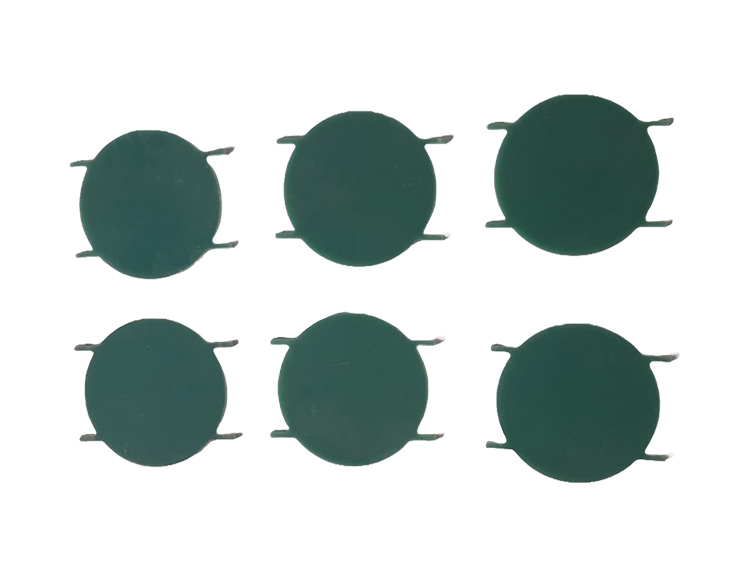
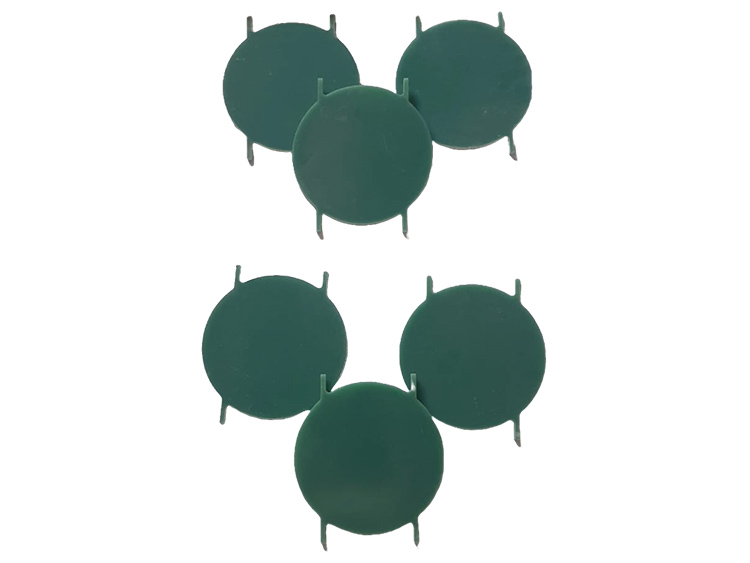
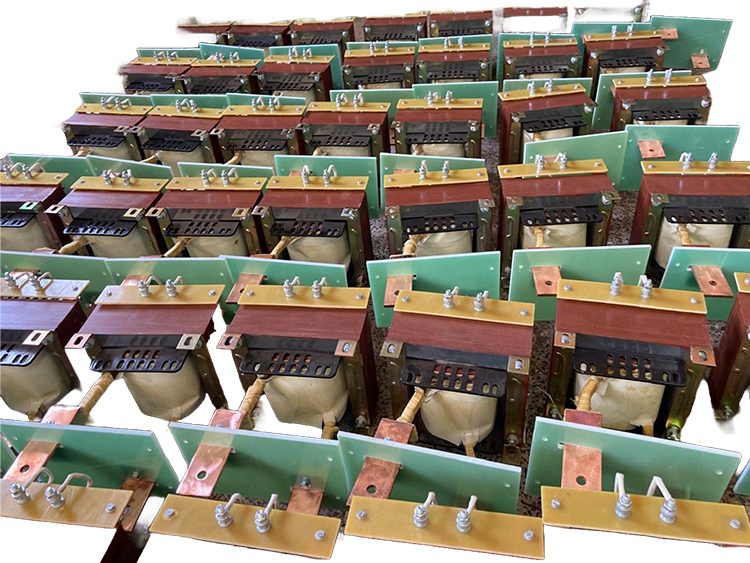
ACC Insulations manufactures precision-engineered fibre glass link boards and electrical insulation components used in power transformers, on-load tap changers, dry-type transformers, and high-voltage switchgear panels across India. Every component is fabricated from glass fibre reinforced epoxy laminates — the industry benchmark for insulation reliability in demanding electrical environments.
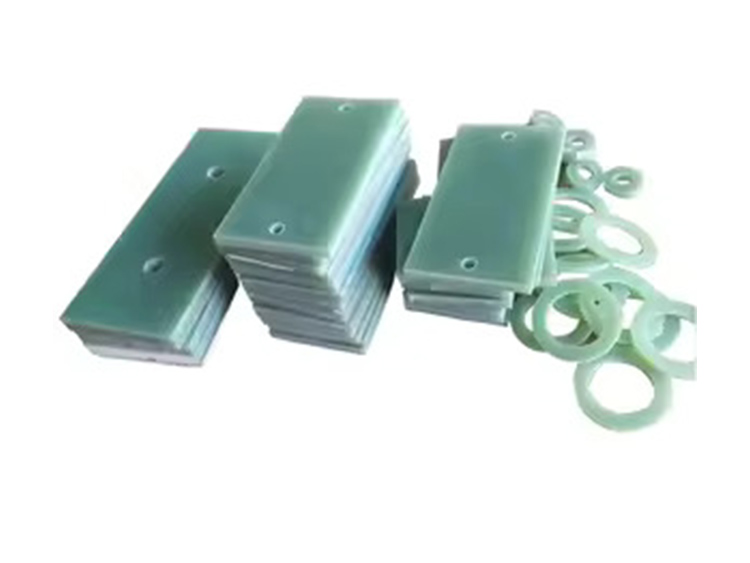
Our link boards are produced using NEMA grade G10 and G11 (per IEC 60893 EPGC 202 / EPGC 203) epoxy glass laminates with a dielectric strength of 15–20 kV/mm and a thermal rating of up to 180°C (Class H). They serve as structural connectors in tap changer assemblies and terminal interconnections, providing outstanding arc resistance, creepage spacing, and mechanical rigidity even under prolonged thermal cycling in oil-cooled or dry-type environments.
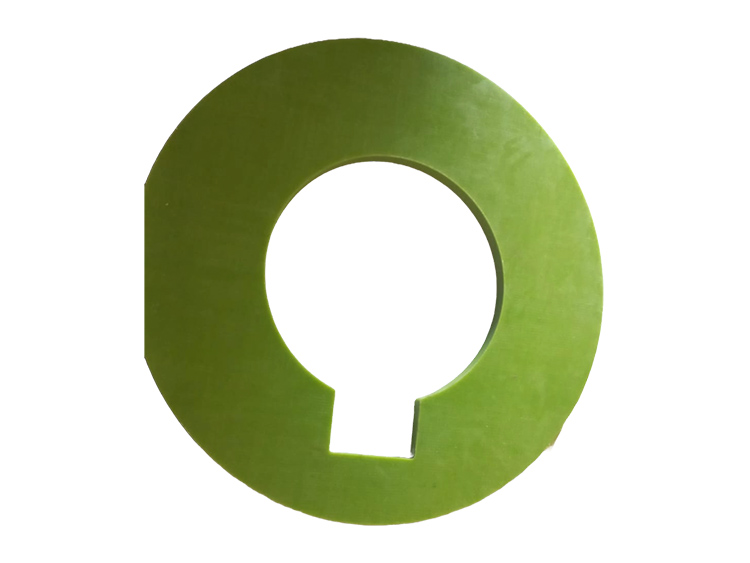
Each board is CNC-machined to tight tolerances from raw laminate sheets, ensuring repeatable fit for OEM transformer assemblies, power distribution switchgear, and custom high-voltage builds.

Technical Specifications
| Fibre Glass Link Board — Product Data | |
|---|---|
| Standard Shapes | Rectangular; custom profiles via CNC (slots, holes, arcs) |
| Base Material | Woven glass fibre cloth + epoxy resin laminate |
| Usage / Application | Transformer tap changers, switchgear, HV terminal boards |
| Available Thickness | 2 mm – 50 mm (standard); custom on request |
| Surface Finish | Natural green/yellow epoxy; colour-coated on request |
| Applicable Grades | NEMA G10, G11, FR4 / IEC EPGC 202, EPGC 203 |
| Dielectric Strength | 15–20 kV/mm (perpendicular) |
| Temperature Rating | Up to 180°C — IEC Thermal Class H |
| Flexural Strength | ≥ 400 MPa (G11 at elevated temp) |
| Flame Retardancy | UL 94 V-0 (G11 / FR4 grades) |
| Moisture Absorption | < 0.1% (non-hygroscopic) |
| Fabrication Method | High-Precision CNC Milling & Drilling |
| Standards | IEC 60893, NEMA LI 1, IS 3854, IPC-4101 |
What Are Fibre Glass Link Boards?
Fibre glass link boards — also called epoxy glass terminal boards, insulation link plates, or G10/G11 laminate boards — are structural insulation components machined from glass fibre reinforced polymer (GFRP) sheets. They electrically isolate conducting terminals while simultaneously bearing mechanical loads from winding connections, tap changer contacts, and bus bar supports inside a transformer tank or switchgear enclosure.
Unlike conventional phenolic boards or wood-based insulators, epoxy glass laminates are non-hygroscopic — they absorb virtually no moisture. This is critical in oil-immersed transformer environments, where moisture ingress into an insulator would degrade creepage distances and lead to partial discharge or flashover at high voltages. The combination of glass fabric reinforcement and cross-linked epoxy resin also delivers superior dimensional stability, allowing CNC-machined features such as drilled holes, milled slots, and threaded inserts to retain their geometry over decades of thermal cycling.
Key insight: A G11 epoxy glass laminate board retains more than 50% of its room-temperature flexural strength even at 155°C — a property that no organic insulator like pressboard or wood can match, and that is essential for tap changer link boards exposed to continuous hot-spot temperatures.
Material Grade Comparison: G10 vs G11 vs FR4
Choosing the correct epoxy glass grade for your application directly affects insulation life, cost, and compliance. Here is a concise comparison of the three grades supplied by ACC Insulations:
| Property | G10 EPGC 202 | G11 EPGC 203 | FR4 |
|---|---|---|---|
| Thermal Class | B (130°C) | H (180°C) | B–F (130–155°C) |
| Dielectric Strength | 15 kV/mm | 16–20 kV/mm | 15–18 kV/mm |
| Flexural Strength (RT) | ≥ 350 MPa | ≥ 400 MPa | ≥ 350 MPa |
| Hot Strength Retention | Moderate | Excellent | Good |
| Flame Retardancy | No (standard) | UL 94 V-0 | UL 94 V-0 |
| Best For | Standard transformer insulation | Tap changers, Class H equipment | PCBs, switchgear panels |
Key Features & Properties
- High Dielectric Strength — 15–20 kV/mm prevents electrical breakdown across tap changer contacts and terminal interconnections even at rated operating voltages.
- Exceptional Mechanical Robustness — Woven glass fabric reinforcement provides tensile and flexural strength far superior to phenolic boards or wood, resisting cracking under fastener torque and vibration.
- Thermal Endurance (Class H) — G11 grade maintains structural and insulating properties continuously at 180°C, surviving the hot-spot temperatures typical of ONAN/ONAF power transformers.
- Non-Hygroscopic — Moisture absorption below 0.1% ensures stable insulation resistance and creepage distances even in humid tropical conditions or oil-immersed environments.
- Flame Retardancy (UL 94 V-0) — G11 and FR4 boards self-extinguish and resist flame propagation, a mandatory safety requirement in enclosed transformer and MV switchgear panels.
- Arc Resistance — High arc resistance prevents carbon tracking across the board surface during transient flashover events, protecting surrounding insulation from degradation.
- Dimensional Stability — Low coefficient of thermal expansion matched to transformer structural components ensures consistent clearances and creepage paths over thousands of thermal cycles.
- Chemical Resistance — Inert to transformer oils, cleaning solvents, and dilute acids, making these boards maintenance-friendly in field service conditions.
Applications of Fibre Glass Link Boards
ACC Insulations' epoxy glass link boards are engineered for any electrical assembly where high dielectric strength, mechanical stability, and thermal endurance are simultaneously required:
- On-Load & Off-Load Tap Changer Assemblies — Link boards serve as the primary insulating platform between selector contacts and transition resistor connections inside tap changers, where they must withstand arcing events and thermal stress during voltage regulation cycles.
- Power Transformer Terminal Boards — Used as HV and LV terminal interconnection plates inside transformer tanks, providing the required creepage and clearance distances as per IEC 60076 for distribution and power transformers up to 220 kV class.
- Dry-Type Transformer (Cast Resin) Insulation — G11 link boards support winding end connections in VPI (Vacuum Pressure Impregnated) and cast-resin dry-type transformers where oil is absent and air-cooling demands robust thermal-class materials.
- Medium Voltage (MV) Switchgear Panels — Epoxy glass boards are used as bus bar insulators, phase barriers, and arc chute supports in 11 kV / 33 kV indoor and outdoor switchgear, offering both mechanical mounting and electrical isolation in a single component.
- Current Transformer (CT) & Potential Transformer (PT) Housings — Internal insulation support structures for instrument transformers where compact clearances demand high-performance dielectric materials.
- Reactor & Inductor Coil Formers — Used as structural coil winding supports in air-core and iron-core reactors, capitalising on the material's non-magnetic properties and thermal stability.
Manufacturing Process at ACC Insulations
Every fibre glass link board produced at our Nashik facility goes through a controlled multi-stage process to ensure dimensional accuracy, surface integrity, and electrical performance:
- Raw Laminate Inspection Incoming G10/G11/FR4 laminate sheets are checked for thickness tolerance (±0.1 mm), surface flatness, and delamination before any machining begins.
- CNC Milling & Profile Cutting Boards are cut to the required outer profile using high-speed CNC routers with carbide tooling, ensuring clean, burr-free edges that do not compromise creepage paths.
- Precision Drilling & Slot Machining Bolt holes, tap-changer contact slots, and countersinks are drilled and milled to ISO H7 tolerances, ensuring accurate fit with OEM transformer hardware.
- Deburring & Surface Preparation All machined edges are chamfered and surfaces are cleaned with compressed air and solvent wipe to remove glass dust and machining residue.
- Electrical & Dimensional Testing Final boards are checked for dielectric withstand voltage, insulation resistance (>10 GΩ at 500 V DC), and critical dimensions against the customer drawing.
- Packaging & Dispatch Boards are individually wrapped and boxed with desiccant to prevent moisture exposure during transit, with full traceability labelling including grade, batch, and inspection sign-off.
Standards & Compliance
Our fibre glass link boards are manufactured in accordance with the following national and international standards:
Why Choose ACC Insulations?
- OEM-Grade Precision — We manufacture against customer-supplied DXF, DWG, or PDF drawings. Our CNC machining delivers tolerances suitable for direct assembly into transformer and switchgear OEM lines without rework.
- Multi-Grade Inventory — We stock G10, G11, and FR4 laminates in a range of standard thicknesses from 2 mm to 50 mm, enabling fast turnaround for both standard and custom orders.
- Integrated Quality Control — All finished components undergo mandatory electrical withstand testing and dimensional inspection before dispatch. We provide test reports on request.
- Experienced in Transformer Sector — ACC Insulations has years of domain experience supplying insulation materials specifically to India's power transformer manufacturing industry — we understand the design intent, not just the dimensions.
- Cost-Efficient at Scale — CNC batch processing on our in-house machines keeps per-unit costs competitive while maintaining the same quality benchmarks from prototypes to production runs of thousands of boards.
Engineering Tools Suite
Calculate creepage distances, dielectric margins, structural load limits, and custom CNC sizing requirements for your Fibre Glass Link Board application using our interactive insulation design tools.
Frequently Asked Questions
Yes. We provide full custom precision fabrication using CNC milling and drilling based on customer-supplied engineering drawings or OEM specifications. We work with G10, G11, and FR4 laminates in any profile or thickness — including complex contours, countersunk holes, threaded inserts, and multi-slot tap changer contact layouts.
Fibre glass epoxy laminates are non-hygroscopic — moisture absorption is below 0.1% compared to 5–10% for wood-based insulators. This is critical in transformer environments where moisture in insulation reduces dielectric strength and can lead to partial discharge. Additionally, G11 boards retain mechanical strength at 180°C, whereas wood degrades rapidly above 100°C. The CNC-machinable nature of epoxy laminates also allows precision dimensional features impossible to achieve in fibrous pressboard.
Yes. Our G11 and FR4 grade epoxy laminate boards comply with UL 94 V-0 flame retardancy — the highest rating for self-extinguishing plastics. They withstand elevated operating temperatures without charring or mechanical collapse, making them safe for enclosed transformer tanks and medium voltage switchgear panels where flame propagation must be strictly controlled.
G10 (EPGC 202) offers excellent electrical insulation and mechanical strength at room temperature with a continuous thermal rating of up to 130°C (IEC Class B). G11 (EPGC 203) is formulated with a higher-performance epoxy resin system that retains flexural strength at elevated temperatures — rated up to 180°C (IEC Class H) — making it the correct choice for tap changer link boards, Class H transformer assemblies, and any application where hot-spot temperatures exceed 130°C. G11 also provides superior arc resistance and UL 94 V-0 flame retardancy not guaranteed in standard G10.
Our boards are produced to IEC 60893 (EPGC 202 / EPGC 203), NEMA LI 1 (G10 / G11), IS 3854 (Bureau of Indian Standards), and IPC-4101 for FR4 grade. Flame retardancy is verified per UL 94 V-0. Test reports covering dielectric strength, insulation resistance, and dimensional checks are available on request.
Standard rectangular profiles cut from stock laminates are generally ready within 5–7 working days. Custom CNC-machined components with drilled holes, slots, or complex profiles typically require 10–15 working days depending on quantity and complexity. We accept small prototype batches as well as high-volume production runs. Share your drawing and quantity via the enquiry form and we will confirm lead time with a quotation within 24 hours.