Renewable Energy Insulation — Maharashtra, India
Insulation for Wind Turbine Generators
Wind turbine generators (WTGs) operate in some of the most unforgiving environments on earth — from salt-laden offshore gusts and extreme humidity to high-altitude temperature swings and relentless vibration. Every component inside the nacelle must be engineered to survive these conditions continuously for 20+ years.
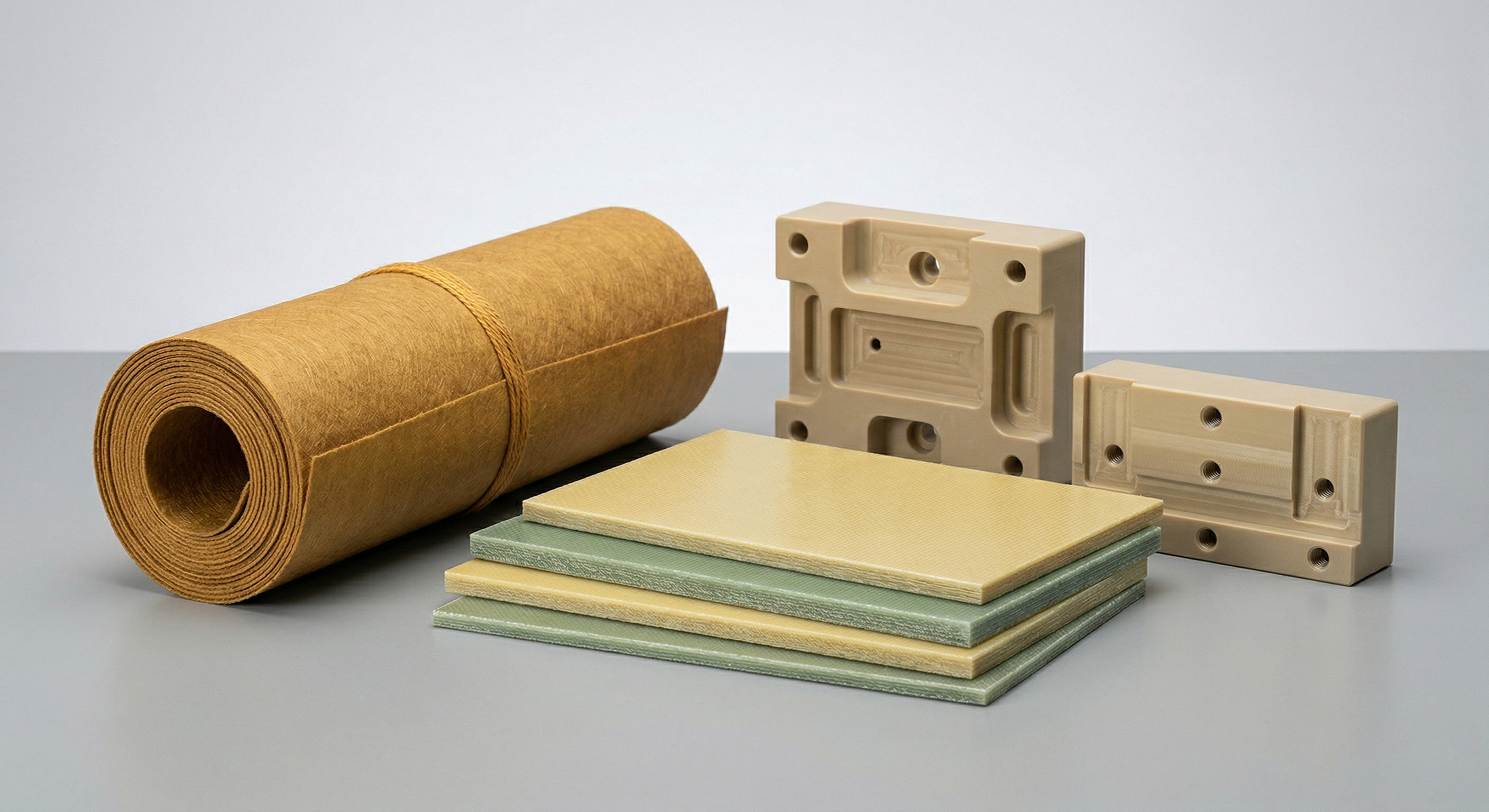
At ACC Insulations, we manufacture and supply heavy-duty WTG insulation materials including stator slot liners, phase separators, G10/G11 epoxy laminates, mica tapes, Aramid composites, and CNC-machined slip ring insulators — purpose-built for the renewable energy sector's demanding electrical and mechanical requirements.

Material Specifications
| WTG Insulation — Technical Overview | |
|---|---|
| Core Material Types | Fibre Glass Epoxy (G10 / G11 / FR4), Mica Tapes, Aramid Laminates (NMN / NHN), Polyimide Films |
| Thermal Class | Class F (155°C) to Class H (180°C) and above — up to Class C (220°C+) on request |
| Environmental Resistance | Offshore salt spray, high humidity, UV degradation, condensation cycling |
| Available Form Factors | CNC-machined supports, slip ring insulators, custom slot liners, phase separators, busbar blocking, wound tapes |
| Dielectric Strength | High — suitable for MV and HV generator windings |
| Flame Rating | UL94 V-0 (self-extinguishing) |
| Mechanical Performance | Excellent anti-vibration rigidity; high tensile, compressive and flexural strength |
| Standards Compliance | IEC 60085, IEC 60034, IEC 60464, relevant IS specifications |
| Customisation | Machined to CAD/drawing; custom slot liner widths, barrier shapes, wedge profiles |
Why Wind Turbine Generators Need Specialised Insulation
Standard industrial insulation materials are simply not adequate for WTG applications. The environment inside a wind turbine nacelle — particularly offshore — combines factors that rapidly degrade conventional materials:
- Continuous mechanical vibration from rotating blades, gearboxes, and generator loads causes standard insulation to crack, delaminate, and fail prematurely.
- Thermal cycling — generators heat up under load and cool down rapidly at rest — causes differential expansion that weakens adhesion between insulation layers.
- Salt spray and humidity (especially offshore) attack hygroscopic insulation materials, drastically reducing dielectric strength over time.
- High-voltage partial discharge (corona) caused by variable-frequency inverter-driven outputs creates intense localised electrical stress on insulation surfaces.
- Long service life requirement — WTG insulation must perform reliably for 20–25 years in inaccessible or difficult-to-service locations, making material selection a critical engineering decision.
Our Comprehensive WTG Insulation Solutions
We manufacture and fabricate a full range of insulation materials and precision components tailored to every critical zone of the wind turbine generator:
Stator Slot Liners
Precision-cut from high-dielectric laminates. Protects copper windings from steel core edges. Available in NMN, NHN, Nomex, and polyimide-based films for Class F–H ratings.
Phase Separators
Die-cut or slit-to-width barriers that isolate phase-to-phase conductors inside stator slots, preventing inter-phase short circuits under vibration and thermal stress.
Slip Ring Insulators
CNC-machined from G11 or FR4 epoxy glass to exact dimensional drawings. Provides robust phase-to-phase and phase-to-earth isolation in DFIG rotor slip ring assemblies.
Structural Epoxy Supports
Rigid G10/G11 machined components used as busbar supports, blocking wedges, and bracing elements — rated for mechanical loads and operating temperatures up to 155°C.
Mica Tapes & Wraps
Mica-glass and mica-polyester tapes used for coil groundwall insulation in MV and HV generator windings. Superior corona and thermal resistance for high-voltage applications.
Aramid Composites (NMN / NHN)
Flexible Nomex-Mylar-Nomex and Nomex-Kapton laminates for slot closure, inter-layer insulation, and conductor wrapping. Outstanding toughness and tear resistance.
Critical Performance Properties
Thermal Class Rating Guide
Selecting the correct thermal class is the single most important material decision in WTG insulation design. Below is the thermal performance range we support:
Most onshore wind turbine generators operate at Class F. Offshore and high-density generators often specify Class H to maintain insulation life under higher thermal loading.
Material Comparison: G10 vs G11 vs FR4 vs Aramid
Each laminate grade serves a specific role in WTG insulation design. Here's how they compare for key performance criteria:
| Property | G10 | G11 | FR4 | Aramid (NMN) |
|---|---|---|---|---|
| Thermal Class | Class B (130°C) | Class F (155°C) | Class B (130°C) | Class H (180°C) |
| Dielectric Strength | Very High | Very High | Very High | High |
| Mechanical Rigidity | High | Very High | High | Flexible |
| Moisture Resistance | Good | Excellent | Good | Good |
| Flame Rating | Not rated | Not rated | UL94 V-0 | UL94 V-0 |
| Best WTG Use | Structural supports | Slip rings, wedges | Panel barriers | Slot liners, wraps |
Manufacturing & Fabrication Capabilities
Wind turbine OEMs and generator manufacturers demand tight tolerances, repeatable dimensions, and verified material traceability. ACC Insulations operates advanced fabrication facilities to meet these requirements:
Material Sourcing & Qualification
Certified G10, G11, FR4, Mica, and Aramid raw materials sourced from qualified suppliers and incoming-inspected for electrical and dimensional conformance.
CNC Routing & Precision Machining
State-of-the-art CNC machining centers produce rigid epoxy glass components — slip ring insulators, busbar supports, wedges, and barriers — machined directly from customer CAD drawings to tolerances of ±0.1 mm.
Precision Slitting & Die-Cutting
Flexible laminates (NMN, NHN, polyimide films, mica tapes) are slit and die-cut to exact slot liner widths, barrier profiles, and tape widths as specified by generator OEM drawings.
Forming & Pre-shaping
Where required, slot liners and phase separators are formed into U-profiles or custom shapes to enable easy winding insertion and ensure precise fit within stator slot geometries.
Quality Assurance & Testing
All components undergo dimensional inspection, dielectric proof testing, visual surface audit, and traceability documentation before dispatch.
Onshore vs. Offshore Wind Turbine Insulation Requirements
The insulation specification for an offshore WTG is significantly more demanding than for an equivalent onshore installation. Here is how requirements differ and how we address each:
| Requirement | Onshore WTG | Offshore WTG |
|---|---|---|
| Moisture / Humidity | Standard resistance | Ultra-low moisture absorption required |
| Salt Spray Exposure | Low | High — marine grade mandatory |
| Thermal Class | Class F (155°C) | Class H (180°C) preferred |
| Flame Retardancy | Recommended | UL94 V-0 mandatory (nacelle fire safety) |
| Service Life | 20 years | 25 years+ (difficult access) |
| ACC Material Recommendation | G11, NMN, FR4 | G11 + Mica tape + NHN composites |
Application Zones in Wind Turbine Generators
Our insulation materials cover every electrically active and structurally critical zone within the WTG nacelle and power train:
Quality Assurance & Standards Compliance
ACC Insulations operates a strict quality protocol for all WTG insulation components. Every order is traceable from raw material certificate to finished product test report:
- Incoming material inspection — raw laminate thickness, density, and dielectric properties verified on receipt
- Dimensional verification — slot liner width, barrier thickness, CNC part dimensions checked with calibrated instruments
- Dielectric proof test — withstand voltage testing per IEC 60464 and IEC 60034 specifications
- Surface quality audit — visual inspection for delamination, dry fibre, voids, or surface contamination
- Thermal class confirmation — resin and laminate grade verified against thermal class declaration
- Material traceability documents — raw material certificates and test reports provided on request
Why Choose ACC Insulations for WTG Insulation?
Specialist Manufacturer
Dedicated to electrical insulation — not a general trader. Every product is manufactured and tested in our own facility in Maharashtra.
Custom-to-Drawing
We produce machined components and cut parts directly from your CAD files or engineering drawings with no minimum order complexity.
IEC & IS Compliant
All materials comply with IEC 60085, IEC 60034, IEC 60464, and relevant IS standards. Documentation provided with each batch.
Renewable Energy Focused
Deep understanding of wind, solar, and EV insulation requirements. We actively support India's transition to clean energy infrastructure.
Fast Turnaround
Standard materials dispatched quickly. Custom-machined parts produced with short lead times to keep your WTG production schedules on track.
Technical Support
Our engineering team assists with material selection, thermal class determination, and insulation system design for new WTG models.
Engineering Tools Suite
Calculate dielectric clearances, thermal derating margins, slot liner thickness, and material selection parameters for your custom WTG insulation system using our interactive tools.
Frequently Asked Questions
Offshore turbines need materials with very low moisture absorption and strong resistance to salt spray and UV degradation. High-grade G-11 epoxy glass laminates are the first choice for rigid structural components due to their excellent moisture and mechanical performance. Mica-glass tapes and Aramid NMN/NHN composites are preferred for flexible winding insulation due to their high thermal class (H, 180°C) and excellent corona resistance. All offshore-grade materials from ACC Insulations meet UL94 V-0 flame retardancy requirements.
A stator slot liner is a precision-cut sheet of insulating material inserted into each slot of the generator's laminated stator core before the copper windings are placed inside. It provides the primary phase-to-ground insulation barrier — protecting copper conductors from the sharp steel core edges and providing electrical isolation between the winding and the stator body. In wind turbine generators, slot liners must endure constant vibration, thermal cycling, and partial discharge for 20+ years. Material selection (NMN, NHN, polyimide, mica-backed films) directly determines winding insulation life.
Yes. ACC Insulations operates advanced CNC machining centers to manufacture custom slip ring insulators, insulating phase barriers, and busbar supports machined to your exact engineering drawings. We work from customer-supplied CAD files or dimensional specifications. Materials used are G11 or FR4 epoxy glass, selected based on the thermal and electrical requirements of your specific generator assembly.
We supply insulation materials covering the full WTG thermal spectrum — from Class F (155°C) standard for most onshore generators, to Class H (180°C) for high-load offshore generators, and up to Class C (220°C+) for specialist applications on request. Our technical team can recommend the correct thermal class based on your generator's rated temperature rise, ambient conditions, and duty cycle.
Yes. G11 and FR4 epoxy glass laminates are specifically engineered for high mechanical strength, dimensional stability, and fatigue resistance under continuous vibration. Aramid composites (NMN/NHN) provide additional toughness and tear resistance for flexible insulation components. All machined parts are designed to maintain dimensional accuracy and structural integrity over the full 20–25 year WTG design life.
G10 is a standard glass-epoxy laminate rated at Class B (130°C) — adequate for room-temperature structural applications but not recommended for hot-running WTG internals. G11 uses a higher-performance epoxy resin system specifically formulated to retain mechanical strength at elevated temperatures up to 155°C (Class F). For wind turbine slip ring insulators, busbar supports, and slot wedges — where the component is exposed to continuous heat and vibration — G11 is always the preferred specification over G10.
Request a Quote
Get pricing & datasheets within 24 hours