
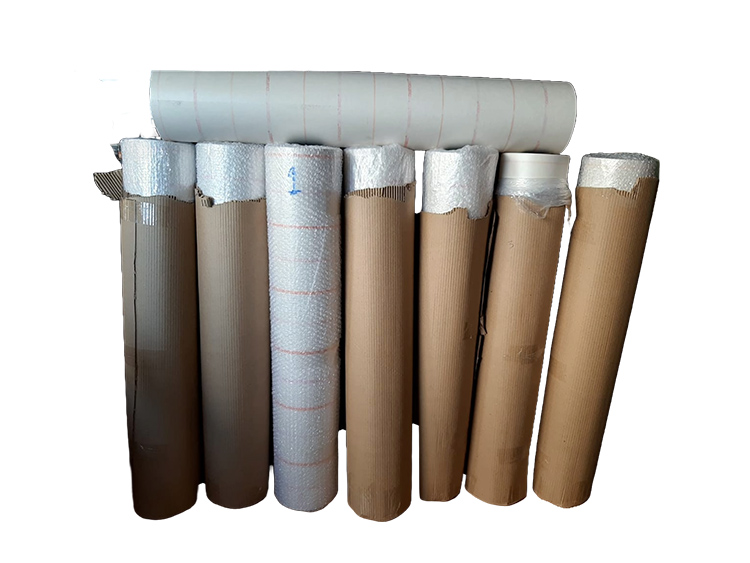
Motor Insulation Materials
Electric motors are among the most demanding environments for insulation materials. Every winding conductor inside a motor must be reliably separated from every other conductor and from the grounded iron core — through continuous electrical stress, thermal cycling from cold start to full operating temperature, mechanical vibration, and exposure to moisture or process chemicals.
ACC Insulations manufactures a complete range of motor insulation materials for LV and HV electric motors — including fibre glass epoxy laminates, stator slot wedges, slot liners, phase insulation, interlayer insulation, end-winding support components, and custom CNC-machined insulation parts. Our materials cover thermal Class B (130°C) through Class H (180°C) and comply with IEC 60085 and IEC 60034.
Key capability: Full CNC machining of custom motor insulation components to your exact drawing — slot wedges, end rings, spacers, and fillers — in any epoxy grade, to ±0.05 mm tolerance.

Thermal Class Guide — Which Class Does Your Motor Need?
Per IEC 60085, every insulation material is assigned a thermal class defining its maximum continuous operating temperature. Choosing the wrong class shortens motor life — for every 10°C above the insulation's rating, service life roughly halves.
Class B
130°CStandard industrial motors, pumps and compressors operating under normal load conditions.
Class F
155°CMost common industrial motor grade. Higher duty cycle, variable speed drives (VFD) and frequent start-stop loads.
Class H
180°CHigh-performance motors, traction drives, EV motors and applications with peak overload conditions.
Class C / 200+
200°C+Extreme service motors — furnace drives, military applications, or motors with sustained overload beyond Class H.
ACC Insulations supplies motor insulation materials covering Class B through Class H. Our fibre glass epoxy laminates (G10 for Class B/F, G11/FR5 for Class F/H), mica composites, and polyester-based slot liners are selected to match your motor's specific thermal class requirement.
Product Specifications
| Motor Insulation Materials — Technical Data | |
|---|---|
| Thickness Range | 0.05 mm to 50 mm (grade & component dependent) |
| Operating Temperature Range | -40°C to +180°C |
| Peak Heat Resistance | Up to 200°C (short duration) |
| Thermal Class Coverage | Class B (130°C), Class F (155°C), Class H (180°C) |
| Reinforcement Systems | Glass Fibre, Mica, Polyester Film, Nomex®-equivalent composites |
| Chemical Resistance | Resistant to solvents, transformer oil, acids, and alkalis |
| Dielectric Strength | Up to 25 kV/mm (grade dependent) |
| Machining Tolerance | ±0.05 mm (CNC machined slot wedges and components) |
| Standards | IEC 60085, IEC 60034, IEC 60893, IS 1516 |
| Available Forms | Flat sheets, slot wedges, slot liners, phase insulation, end rings, custom profiles |
Why Motor Insulation Fails — and How to Prevent It
Understanding why motor insulation degrades is the key to selecting the right material. According to industry data, insulation failure is the leading cause of motor breakdown — responsible for over 30% of all motor failures in industrial environments. There are five primary failure mechanisms:
- Thermal ageing — the most common cause. At temperatures above the insulation's rated class, the polymer chains in the material break down (oxidise), making the material brittle, losing dielectric strength, and eventually cracking under vibration. Every 10°C over the rated temperature halves the insulation's expected service life
- Moisture ingress — water absorbed into insulation dramatically reduces its dielectric strength. In humid or outdoor environments, or after motor washdowns, moisture penetrates through micro-cracks and wicks through hygroscopic materials, creating conductive paths that cause turn-to-turn or phase-to-ground faults
- Partial discharge (corona) — in high-voltage motors (above 3.3 kV), voids and delaminated areas within the insulation system create sites where localised electrical discharge occurs at voltages well below full breakdown. This erodes the insulation slowly until full puncture occurs
- Mechanical vibration and stress — motors vibrate continuously in service. Poorly supported windings flex with each vibration cycle, fatiguing the insulation at bends and transitions. Slot wedges that loosen allow conductors to move, abrading the turn insulation against the slot core
- Chemical attack — in process industries, motor insulation is exposed to lubricating oils, cleaning solvents, acids, and alkalis. Materials without adequate chemical resistance soften, swell, and lose mechanical integrity
ACC Insulations' motor insulation materials are engineered to resist all five failure mechanisms — selecting the correct thermal class, using low-moisture-absorption glass fibre and mica composites, providing high dielectric strength for corona resistance, and achieving tight dimensional tolerances that keep slot wedges firmly in place throughout the motor's service life.
Types of Motor Insulation Materials We Supply
ACC Insulations manufactures and supplies the following motor insulation material types:
Fibre Glass Epoxy Laminates
G10 (Class B/F), G11 (Class F/H), FR4 and FR5 grades in flat sheet form for slot liner blanks, phase separator blanks, and machined components. High dielectric strength, moisture resistant, dimensionally stable.
G10 / G11 / FR4 / FR5Stator Slot Wedges
CNC-machined to your drawing from G11 or FR5 laminate. Wedge profile retains winding conductors in stator slots against centrifugal and electromagnetic forces. Tight tolerance ensures consistent slot filling and no conductor movement.
CNC Machined — ±0.05 mmSlot Liners
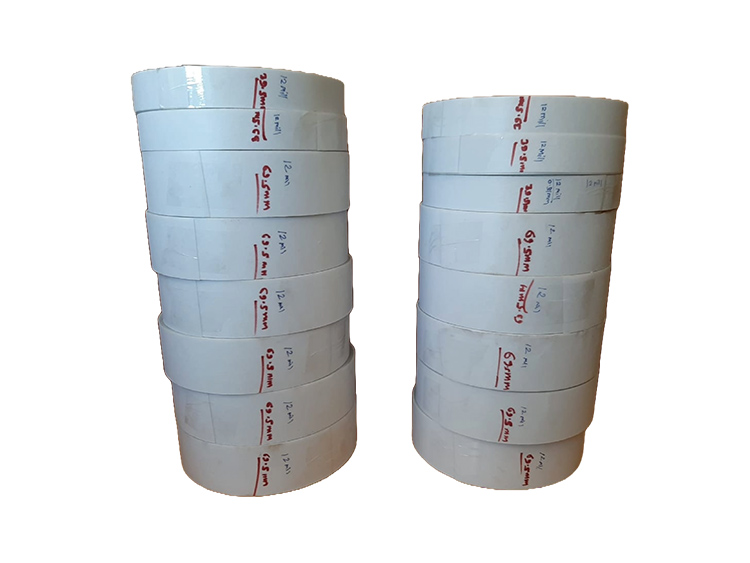
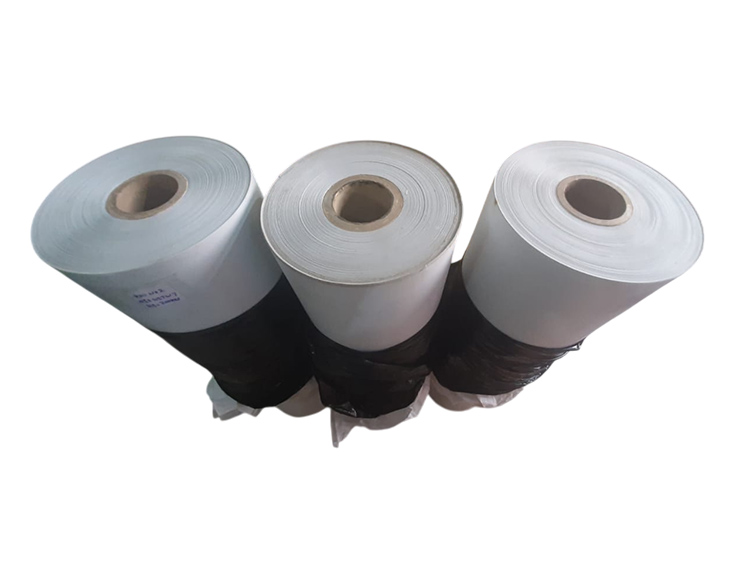
Pre-formed or flat-cut slot liners provide the primary ground wall insulation between stator conductors and the iron core. Available in DMD (Dacron-Mylar-Dacron), glass-backed polyester, and rigid epoxy laminate.
DMD / Polyester / EpoxyPhase Insulation
Flat sheets or pre-formed barriers placed between winding phases in the end-turn region to prevent phase-to-phase contact under mechanical load or vibration. Critical for fault prevention in 3-phase motors.
3-Phase SeparationInterlayer & Turn Insulation
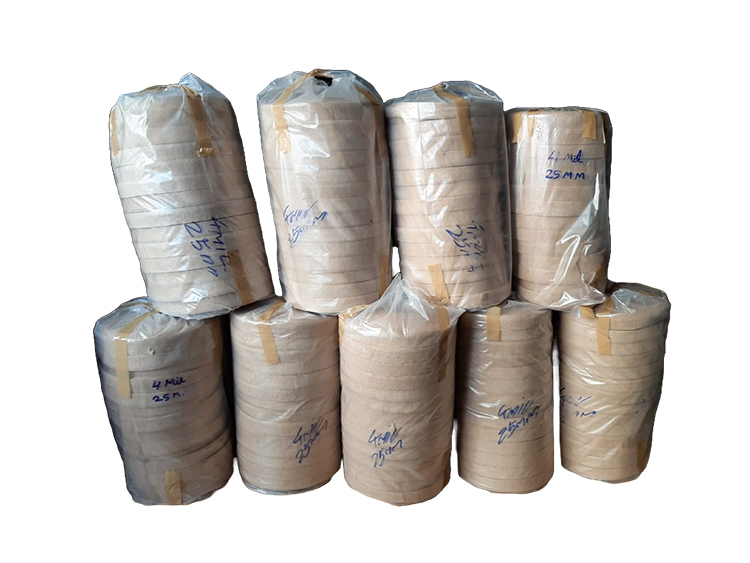
Thin insulation sheets or strips placed between winding layers within each slot to prevent inter-layer electrical contact. Thickness is selected based on the winding voltage and number of layers.
Layer SeparationEnd-Winding Supports
Structural insulation rings, blocking pieces, and brackets machined from rigid epoxy laminate to support the end-turn region of the winding against vibration and the electromagnetic forces of motor starting currents.
Structural SupportThe Complete Motor Winding Insulation System
Motor insulation is not a single material — it is a layered system where each component serves a specific role. Here is how the layers work together in a typical 3-phase AC induction motor stator:
Turn Insulation
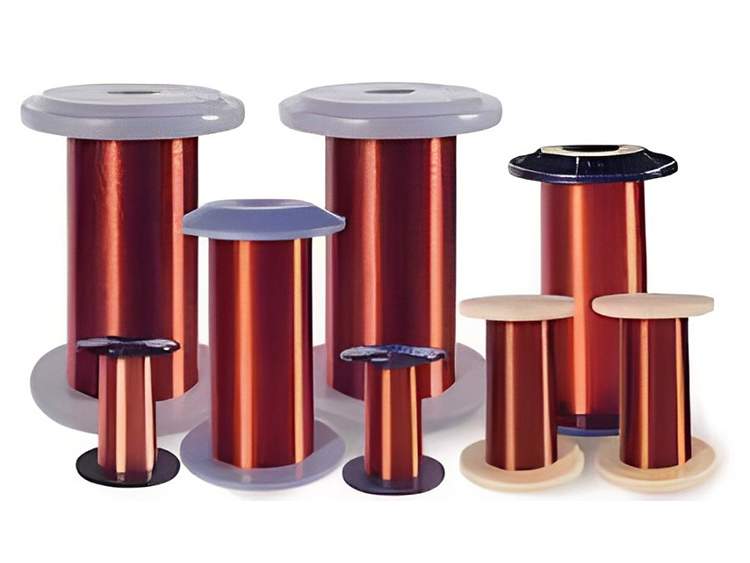
The conductor wire itself is coated with a thin enamel or varnish layer (the "turn insulation") that isolates adjacent turns from each other within the same coil. This is the primary insulation and is typically the thinnest layer in the system.
Slot Liner (Ground Wall Insulation)
The slot liner is placed in each stator slot before the conductor is inserted. It provides the ground wall insulation — the barrier between the live conductors and the grounded iron stator core. In LV motors this may be 0.2–0.5 mm polyester film; in HV motors it may be 2–5 mm of rigid epoxy laminate or mica tape.
Interlayer Insulation
Between each layer of conductors within a slot, a thin insulation sheet is placed to prevent electrical contact between layers at different potentials. This is especially important in multi-layer windings where the voltage difference between layers can be significant.
Slot Wedge
Once all conductors are in place, a wedge-shaped insulation piece is driven into the open end of each slot to retain the conductors mechanically. The wedge must be insulating (metallic wedges are not permitted in this location) and must maintain tight engagement throughout the motor's service life despite vibration and thermal cycling.
Phase Insulation
In the end-turn region where all three phases overlap, flat insulation barriers are placed between phases to prevent phase-to-phase contact. This is particularly critical during starting, when current surges create high electromagnetic forces that can displace the end-turn conductors.
VPI Varnish Impregnation
After all mechanical insulation is assembled, the complete stator is impregnated with insulating varnish or resin using the VPI (Vacuum Pressure Impregnation) process. The varnish fills all remaining air voids, bonds the insulation system together, and provides moisture resistance. ACC Insulations' glass fibre and composite materials are fully VPI-compatible.
Key Properties of Our Motor Insulation Materials
- High thermal resistance (Class B to Class H) — maintains mechanical and electrical integrity at continuous operating temperatures from 130°C to 180°C, protecting winding conductors through thousands of thermal cycles
- High dielectric strength (up to 25 kV/mm) — provides reliable electrical isolation between turns, layers, phases, and ground at all rated voltages from LV to HV
- Low moisture absorption — glass fibre and mica composite structures resist moisture ingress, maintaining stable dielectric strength in humid, outdoor, or wash-down environments
- Chemical resistance — resistant to lubricating oils, coolants, solvents, acids, and alkalis encountered in industrial motor applications
- Vibration and wear resistance — rigid epoxy laminate slot wedges maintain tight slot filling under continuous vibration, preventing conductor abrasion
- VPI compatibility — all glass fibre and composite materials are compatible with standard VPI resin systems used in motor manufacturing
- Dimensional accuracy (±0.05 mm) — CNC-machined components achieve tight tolerances for consistent slot filling across high-volume motor production
Applications
- Low-voltage induction motors (up to 1 kV) — standard industrial pumps, fans, compressors, conveyors, and general-purpose drives across all IEC frame sizes
- High-voltage motors (3.3 kV to 15 kV) — large industrial drives for mills, compressors, and heavy process plant requiring HV class insulation with mica-based ground wall systems
- Variable frequency drive (VFD) applications — Class F and Class H insulation for motors driven by inverters, where switching waveforms create elevated insulation stress through dV/dt voltage spikes
- Traction and EV motors — high thermal class, high dielectric strength materials for railway traction motors and electric vehicle drive motors
- Generator stator windings — slot wedges, phase insulation, and ground wall insulation for AC synchronous generators in power plants
- Special-purpose motors — crane drives, marine motors, ATEX explosion-proof motors, and hazardous-area applications requiring high-reliability insulation
Manufacturing Excellence at ACC Insulations
Producing consistent, reliable motor insulation requires controlled manufacturing processes at every stage. At ACC Insulations:
- Precision CNC machining — slot wedges and custom profiles are machined on CNC centres to ±0.05 mm tolerance from G11, FR5, or other specified epoxy laminate grades
- Controlled cutting and forming — slot liners and phase insulation are cut to your specified slot dimensions, minimising waste and ensuring consistent fit
- Curing and finishing — composite sheets are processed under controlled temperature and pressure conditions to achieve target density and mechanical properties
- Dimensional verification — every batch of machined components is dimensionally inspected against customer drawings before dispatch
- Electrical performance testing — dielectric strength and insulation resistance testing on representative samples from each production batch
Quality & Compliance
- IEC 60085 — Thermal classification of electrical insulation (defines Classes B, F, H)
- IEC 60034 — Rotating electrical machines — requirements for motor insulation
- IEC 60893 — Industrial laminated thermosetting materials (G10, G11, FR4, FR5)
- IS 1516 — Indian Standard for insulation of electrical machines
- Customer-specific motor OEM design specifications accepted
Benefits of Choosing ACC Insulations
- Single supplier for all motor insulation components — laminates, slot wedges, slot liners, phase insulation, and end-winding supports
- Custom CNC machining to your drawing in any epoxy grade, any volume
- Full thermal class range B through H — one supplier, all ratings
- IEC 60085, IEC 60034, and IEC 60893 compliance with batch test documentation
- Consistent quality and reliable delivery for OEM motor production schedules
- Technical support for material selection, thermal class matching, and dimensional specification
Engineering Tools Suite
Calculate exact dielectric breakdown limits, thermal class requirements, insulation thickness, and winding clearances for your electric motor designs using our interactive tools.
Frequently Asked Questions
ACC Insulations manufactures a complete range of motor insulation materials including fibre glass epoxy laminates (G10, G11, FR4, FR5), stator slot wedges, slot liners, phase insulation, interlayer insulation, end-winding support rings, composite insulation sheets, and custom CNC-machined components. All products cover thermal Class B (130°C) through Class H (180°C) and comply with IEC 60085 and IEC 60034.
Every electric motor runs at a specific operating temperature depending on its design and load. IEC 60085 defines thermal classes (B at 130°C, F at 155°C, H at 180°C) specifying the maximum continuous temperature the insulation can withstand without degrading. Choosing insulation rated below the motor's actual operating temperature causes premature ageing — for every 10°C above the rated temperature, insulation life roughly halves. Using the correct thermal class ensures the motor reaches its full design life of 20–30 years.
A stator slot wedge is a wedge-shaped component fitted into the open end of each stator slot to retain winding conductors against centrifugal and electromagnetic forces. It must be made from an insulating material to prevent electrical contact between live conductors and the grounded stator core. Metallic wedges cannot be used in this location. ACC Insulations CNC-machines slot wedges to tight tolerances from G11 or FR5 epoxy laminate for Class F and Class H applications.
VPI (Vacuum Pressure Impregnation) is the process used to impregnate a completed motor winding with varnish or resin under vacuum and then pressure. Vacuum removes air from the insulation system; resin then fills all voids under pressure, creating a void-free, moisture-resistant, mechanically rigid insulation system. ACC Insulations' glass fibre laminates and composite insulation materials are fully compatible with standard VPI resins used in industrial motor manufacturing.
Yes. ACC Insulations supplies motor insulation materials for both low-voltage motors (up to 1 kV) and high-voltage motors (3.3 kV to 15 kV and above). For HV motors we supply higher-grade epoxy laminates with superior dielectric strength, mica-based composites for corona resistance, and thicker slot liners to meet the greater clearance requirements of medium-voltage stator windings.
Yes. ACC Insulations operates CNC machining centres capable of producing custom motor insulation components — slot wedges, end rings, spacers, and fillers — to your exact engineering drawings in any epoxy laminate grade, to tolerances of ±0.05 mm. We accept drawings and produce from prototype quantities through full production volumes.
Our motor insulation materials comply with IEC 60085 (thermal classification of electrical insulation), IEC 60034 (rotating electrical machines), IEC 60893 (epoxy laminate materials), and IS 1516 (Indian Standard for electrical machines insulation). Customer-specific motor OEM requirements are also accepted on request.