
Industrial Laminate Sheets — Paper Base & Fabric Base
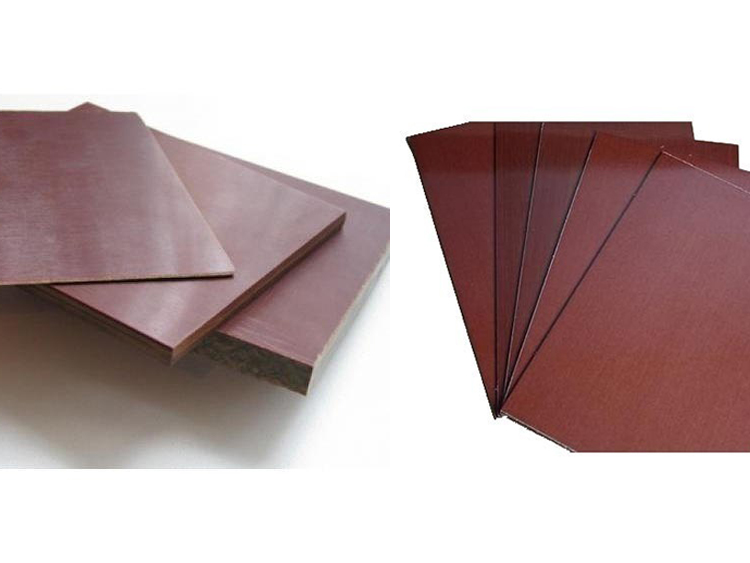
Industrial laminate sheets, also known as phenolic laminated boards or thermoset laminate sheets, are high-performance composite materials used across electrical, mechanical, and heavy engineering applications. ACC Insulations manufactures both paper base and fabric base grades of industrial laminates, designed to deliver consistent dielectric strength, dimensional stability, and mechanical performance in demanding environments.
Whether you need an electrical insulation board for a switchgear panel, a busbar support material for a power distribution system, or a machinable blank for precision engineering components, our laminate range covers the full spectrum of applications.
Two Families, One Source
- Paper base laminates — kraft or cotton paper reinforcement impregnated with phenolic resin. Best for electrical insulation: high dielectric strength, low moisture absorption, good machinability.
- Fabric base laminates — woven cotton fabric reinforcement with phenolic resin. Best for mechanical parts: higher tensile and impact strength, excellent CNC machinability, better wear resistance.

| Product Specification | |
|---|---|
| Available Grades | PFCC01, PFCC04, F2, F3, F4, PFCP02, PFCP03, P2, P3 |
| Sheet Thickness | 0.5 mm to 100 mm |
| Standard Sheet Sizes | 1220 × 2440 mm • 1220 × 1220 mm |
| Standards | IEC 60893 • NEMA LI-1 • IS 1009 |
| Custom Sizes | Available on request — CNC cut-to-size service |
Grade-by-Grade Guide
Understanding which grade you need is the fastest path to the right laminate. The grade codes follow IEC 60893 and NEMA LI-1 nomenclature. Here is what each one means:
Paper base, phenolic resin. General purpose electrical insulation. Good dielectric strength, economical.
Paper base, phenolic resin, improved dielectric strength. Used in switchgear panels and HV busbar supports.
Paper base, phenolic resin, cold-punching grade. Punched to shape at room temperature for high-volume production.
Paper base, phenolic, higher tracking resistance. For applications requiring higher CTI (Comparative Tracking Index).
Fabric base, woven cotton, phenolic resin. Good mechanical and dielectric balance. General engineering use.
Fabric base, phenolic, higher mechanical strength. CNC machinable — gears, cams, bearing housings, spacers.
Fabric base, phenolic, highest tensile grade. Heavy-duty mechanical components under sustained impact load.
Fabric base, phenolic, cotton cloth reinforcement. Good all-round mechanical and electrical performance.
Fabric base, phenolic, fine-weave cotton cloth. Better surface finish — preferred for precision-machined terminal boards and relay bases.
Paper Base vs Fabric Base — Property Comparison
Use this table to quickly identify which laminate family suits your design requirement. Electrical insulation applications almost always start with paper base; mechanical and structural applications typically require fabric base grades.
| Property | Paper Base (P2, P3, PFCP) | Fabric Base (F2, F3, F4, PFCC) |
|---|---|---|
| Dielectric Strength | 15–30 kV/mm (Excellent) | 10–18 kV/mm (Good) |
| Tensile Strength | 80–120 MPa (Moderate) | 120–180 MPa (High) |
| Impact Resistance | Moderate | High |
| Machinability (CNC) | Good — flat cut parts | Excellent — complex profiles |
| Wear Resistance | Low | High |
| Moisture Absorption | < 1.0% | < 2.0% |
| Thermal Class (Continuous) | Class E (120°C) | Class E (120°C) |
| Typical Applications | Busbar supports, switchgear panels, transformer barriers | Gears, bearing housings, terminal boards, structural spacers |
How to Select the Right Grade
Key Properties of Industrial Laminate Sheets
- High dielectric strength: Paper base grades achieve 15–30 kV/mm, making them reliable electrical insulation boards in high-voltage switchgear and panel applications.
- Excellent mechanical strength: Fabric base grades withstand tensile stresses up to 180 MPa — suitable for load-bearing structural insulation components.
- Good machinability: Both families can be drilled, milled, sawed and turned. Fabric base grades specifically are used for CNC-machined precision parts including gears and cams.
- Fire retardant: Available in self-extinguishing phenolic formulations meeting UL94 V-1 and higher, critical for switchgear and panel board applications.
- Dimensional stability: Low thermal expansion and minimal warping under operating temperatures ensure long-term fit accuracy in assembled equipment.
- Chemical resistance: Resistant to common industrial oils, transformer mineral oil, and weak acids — suitable for use inside transformer tanks and outdoor switchgear.
- Customisable surface finish: Available in natural phenolic, matte, and fine-surface finishes to suit bonding, coating or direct-assembly applications.
Applications Across Industries
Industrial laminate sheets serve as the backbone material across a wider range of electrical and mechanical applications than most buyers initially realise. Here is where each family is used in practice:
Electrical & Power Applications
- Busbar supports and barriers in LV and MV switchgear panels — paper base grades P2, P3, PFCP03
- Transformer insulation boards and barriers between windings — paper base grades in transformer insulation systems
- Relay mounting boards and terminal strip bases — PFCC04 for clean surface and good machinability
- Motor terminal boards and wedge insulation in stator slots — paper and fabric base grades
- Arc chute insulation in circuit breakers and contactors — high-temperature phenolic grades
- Capacitor divider boards and metering panel insulation in energy meter housings
- Distribution panel back-boards for DIN rail and MCB mounting
Mechanical & Structural Applications
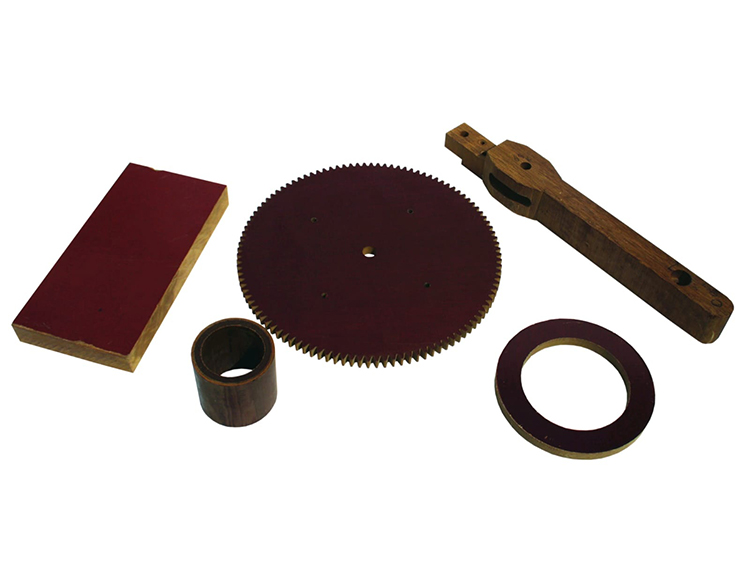
- Precision gears and cams for quiet, low-friction operation in textile machinery, printing machines and food processing — fabric base grade F3, F4
- Bearing housings and bushes where electrical isolation of rotating shafts is needed alongside wear resistance
- Structural spacers and clamp plates in transformer coil assemblies
- Jigs and fixtures for electrical testing setups requiring a non-conductive work surface
- Sucker rods and pump components in the petrochemical industry where corrosion resistance is essential
- Automotive and EV industry insulation barriers and mounting plates in battery management systems
Features
- Fire retardant: Self-extinguishing phenolic chemistry reduces fire risk in enclosed panel environments.
- Environmentally responsible: Phenolic laminates have a long service life, reducing replacement waste. No heavy metals or halogens in standard grades.
- Customisable surface finishes: Natural, matte or fine-weave surface options for bonding, screen printing or direct assembly.
- CNC machinability: Can be drilled, routed, milled and tapped to tight tolerances using standard carbide tooling.
- Strength and durability: Thermoset cross-linked structure does not soften at operating temperatures unlike thermoplastics, maintaining dimensional integrity over decades.
How Industrial Laminate Sheets Are Made
Understanding the manufacturing process helps engineers make better material choices. ACC Insulations produces industrial laminate sheets using a multi-stage thermoset compression process:
- Reinforcement preparation: Kraft paper or woven cotton fabric is cut to size and inspected for basis weight and consistency.
- Resin impregnation: The reinforcement is passed through a phenolic resin bath and dried in a treater oven to produce B-stage prepreg sheets at controlled resin content.
- Lay-up: Multiple prepreg sheets are stacked in a book to achieve the target thickness, then placed between mirror-finish stainless steel press plates.
- Hot press curing: The stack is consolidated in a heated hydraulic multi-daylight press at controlled temperature and pressure to fully cross-link the thermoset resin.
- Post-cure and inspection: Panels are post-cured, cooled under pressure, then inspected for dielectric strength, thickness, flatness, and surface quality before dispatch.
Standards & Compliance
Our industrial laminate sheets are manufactured and tested to meet the following international and Indian standards:
- IEC 60893 — International standard for industrial rigid laminated sheets based on thermosetting resins for electrical purposes. Covers designation system (PF, MF, UF, EP, SI type codes) and property requirements.
- NEMA LI-1 — American National Electrical Manufacturers Association laminate standard. Covers Grade designations (XX, XXXP, G-3, G-5, G-7, G-10, G-11, FR-4 etc.) widely referenced in export orders and OEM drawings.
- IS 1009 — Bureau of Indian Standards specification for phenolic laminated sheets and tubes.
- Customer-specific OEM standards and military specifications on request.
Industries Using Industrial Laminate Sheets
- Transformer manufacturing — insulation boards, spacers, barriers, clamping rings
- Switchgear and electrical panel manufacturing — busbar supports, arc chutes, back-boards
- Motor and generator manufacturing — slot wedges, terminal boards, end-shield insulation
- Automotive and EV manufacturing — battery cell separators, BMS mounting plates, HV junction insulation
- Textile and printing machinery — CNC-machined gears, cams, pulleys and guides
- Heavy machinery and engineering — structural spacers, bearing housings, pump components
- Power distribution equipment — metering panels, capacitor divider boards, earthing panels
Why Choose ACC Insulations for Industrial Laminate Sheets?
ACC Insulations has manufactured and supplied industrial laminate sheets to OEMs and engineering companies across India for over three decades. Here is what sets our supply apart:
- Full grade range in stock: We stock all nine standard grades (P2, P3, PFCP02, PFCP03, F2, F3, F4, PFCC01, PFCC04) in multiple thicknesses — no long lead times for common sizes.
- Custom cut-to-size service: We cut sheets to your exact drawing dimensions using precision saws and CNC routing, reducing your fabrication steps and material waste.
- Batch testing and certification: Each batch is tested for dielectric strength and key mechanical properties with test certificates available on request.
- Technical support: Our engineering team assists with grade selection, thickness calculation, and application troubleshooting — especially useful for engineers replacing materials or qualifying new designs.
- OEM compliant: We supply to leading Indian transformer manufacturers, switchgear OEMs, and motor manufacturers under their specific material specifications.
Engineering Tools Suite
Calculate exact dielectric clearances, weight-to-strength ratios, and precise sizing for your paper or fabric base industrial laminate sheets using our interactive calculators.
Frequently Asked Questions
Industrial laminate sheets are used for electrical insulation (busbar supports, switchgear panels, transformer barriers), mechanical structural components (gears, bearing housings, spacers), and relay mounting boards across electrical, power, automotive, textile and engineering industries. The grade chosen determines whether the application is primarily electrical or mechanical.
Paper base laminates (P2, P3, PFCP series) use kraft or cotton paper as reinforcement, giving them excellent dielectric strength (15–30 kV/mm) and making them ideal for static electrical insulation applications. Fabric base laminates (F2, F3, F4, PFCC series) use woven cotton fabric as reinforcement, providing higher tensile strength (up to 180 MPa), better impact resistance, and excellent CNC machinability for dynamic mechanical parts like gears, cams and bearing housings.
Yes. Paper base phenolic laminates — particularly grades P3 and PFCP03 — are widely used in high-voltage environments due to their dielectric strength of 15–30 kV/mm and high tracking resistance (CTI). They are suitable for switchgear panels, HV busbar supports and transformer insulation barriers. These grades comply with IEC 60893 and IS 1009 standards.
Fabric base grades F3 and PFCC04 are best for CNC machining. F3 provides the mechanical toughness needed for gears, bearing pads and structural spacers under dynamic load. PFCC04 uses a fine-weave cotton cloth reinforcement that produces a cleaner surface finish — preferred for precision relay bases and motor terminal boards where surface quality matters. Both are easily drilled, milled and tapped with standard carbide tooling.
Our industrial laminate sheets comply with IEC 60893 (international thermosetting laminate standard), NEMA LI-1 (US laminate grade standard widely referenced in export orders), and IS 1009 (Bureau of Indian Standards for phenolic laminated sheets). Test certificates confirming compliance are available with each order.